

Email us your queries on requirements (volume, variant, specifications, delivery timeline).Our team responds within 24 hours
Copper & Brass Kitchenware
( Please Click on image for better view and discription )


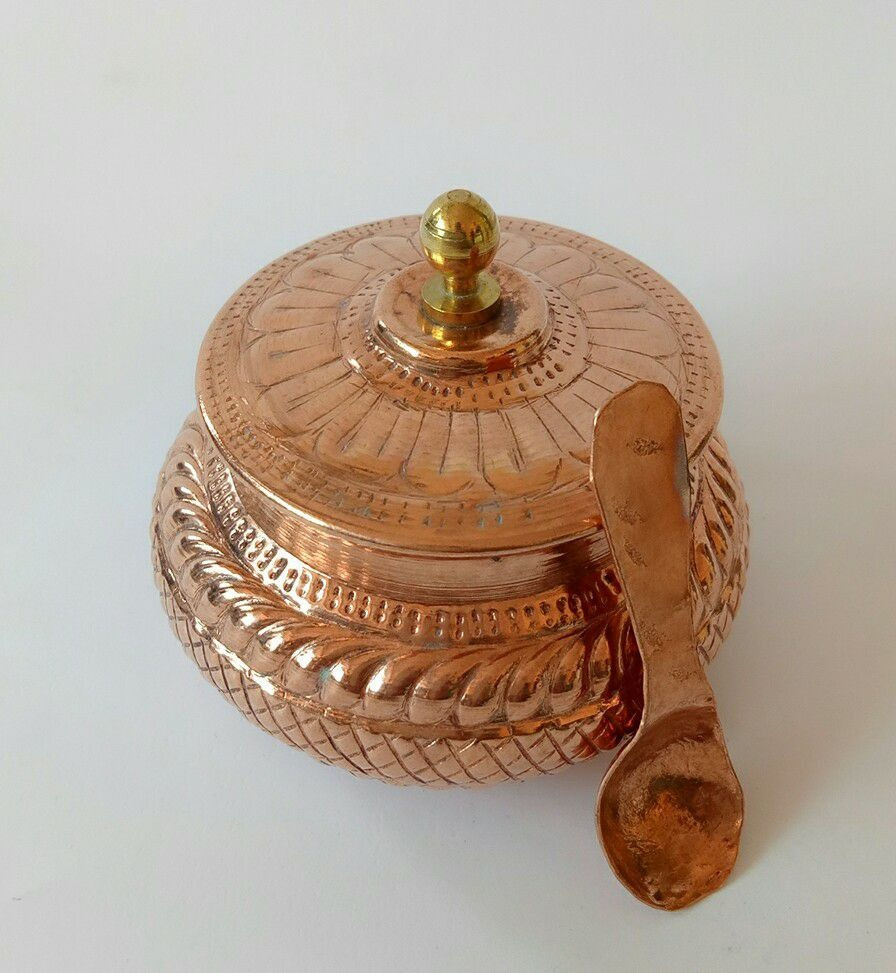

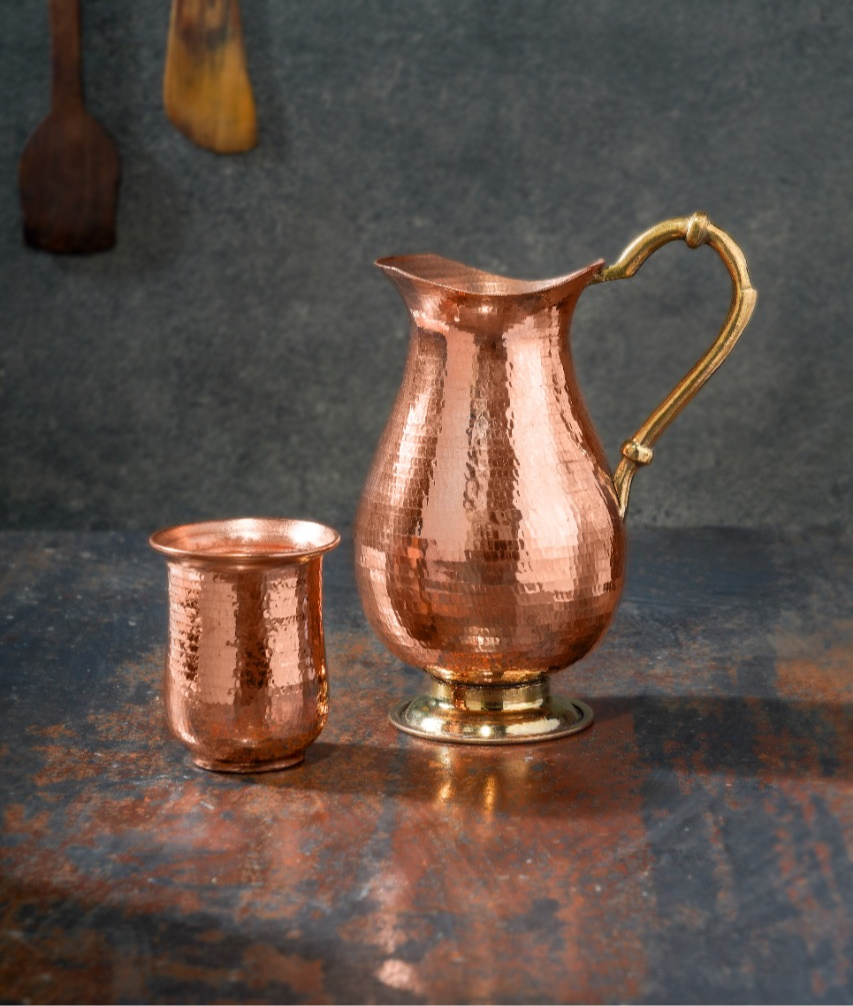
Why Choose Copper & Brass Kitchenware:
-
Natural Antimicrobial Properties
Copper and brass naturally kill harmful bacteria, keeping stored water and food safer and fresher. -
Health Benefits (Traditional & Scientific)
Used in Ayurveda to support digestion, immunity, detoxification, and balanced body pH. Brass helps retain food nutrients and ensures even heating. -
Eco-Friendly & Sustainable
100% recyclable, long-lasting, and free from plastic or synthetic coatings—ideal for environmentally conscious buyers. -
Chemical-Free & Safe
No toxic coatings like PFAS or PFOA, making them a safer alternative to non-stick cookware when used properly. -
Excellent Heat Conductivity
Copper provides fast, even heating, saving energy and preventing food from burning. -
Premium Aesthetic Appeal
Elegant, traditional, and luxury-looking—popular in modern homes, hotels, cafés, and restaurants. -
Handcrafted & Heritage Value
Celebrates traditional craftsmanship and artisan-made products with cultural significance. -
Durable & Repairable
Built to last for decades, easily repairable and polishable, offering long-term value.


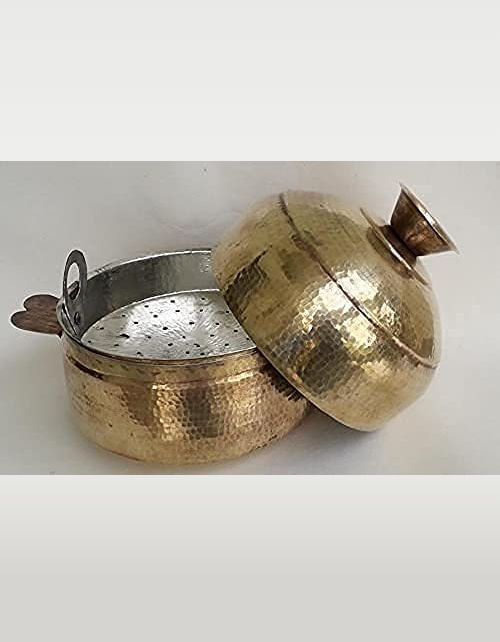


Available Options:
-
We make custom designs for our premium customers. So the product depends on your requirment.
-
Also you can browse our product gallery for ideas
-
Custom sizes, engravings, and bulk orders are available for export.
Things you should know.......
What is Kalai?
-
Kalai is Tin coating applied to the food-contact surface of copper (tamba) and brass (peetal) utensils.
-
The coating creates a protective barrier between the metal and food.
-
Traditionally done by skilled craftsmen called “kalaiwalas.”
Why Kalai is Necessary?
1. Health & Food Safety
-
Copper and brass react with acidic foods (lemon, tomato, curd, vinegar).
-
This reaction can cause metal leaching, leading to:
-
Bitter/metallic taste
-
Greenish residue (copper salts)
-
Health issues if consumed regularly
-
-
Tin is non-toxic and food-safe, preventing this reaction.
2. Prevents Corrosion
-
Bare copper/brass oxidizes over time.
-
Kalai slows down oxidation and surface damage.
3. Improves Taste & Hygiene
-
Tin does not alter taste.
-
Smooth tin surface is easier to clean and less prone to bacterial buildup.
4. Traditional + Ayurvedic Use
-
Copper utensils are valued for water storage and mineral benefits.
-
Kalai ensures these benefits without toxicity during cooking.
How Kalai is Done (Traditional Method)?
-
Deep Cleaning
-
Utensil is scrubbed to remove old tin, oxide, and grease.
-
-
Heating
-
Utensil is heated evenly over fire.
-
-
Tin Application-
-
Pure tin is rubbed onto the hot surface.
-
Tin melts and spreads evenly.
-
-
Polishing
-
Surface is smoothed and excess tin removed.It must be done by experienced professionals to ensure uniform, food-grade coating.
-
How Frequently Should Kalai Be Done?
This depends on usage, food type, and cleaning habits.
Signs You Need Re-Kalai
-
Copper/brass color showing through
-
Black, dull, or patchy surface
-
Food sticking or tasting metallic
Care Tips to Extend Kalai Life
-
❌ Avoid metal scrubbers
-
❌ Do not cook on very high heat
-
❌ Avoid storing food for long periods
-
✔ Use mild detergent and soft sponge
-
✔ Dry immediately after washing
Important Note
-
Never cook acidic foods in un-kalaied copper/brass utensils.
-
Water storage vessels may not need kalai, but cooking utensils absolutely do.
Our copper and brass cookware intended for cooking is supplied with a food-grade tin (kalai) lining already applied, making it safe and ready for immediate use.
Tin lining is a traditional and internationally accepted method used to prevent direct contact between food and copper/brass, especially when cooking acidic dishes. Under normal household use and with proper care, the tin lining typically lasts several years.
As traditional re-tinning services may not be easily available in all countries, we provide:
-
High-purity, food-grade tin lining at the time of manufacture.
-
Detailed care and usage guidelines to extend lining life.
-
Re-tinning support when products are returned to India or during bulk servicing
We are happy to advise customers on the best option based on their usage and local regulations.